Home › Guides › Make a cappuccino
How to make a cappuccino at home
A cappuccino is espresso, steamed milk and a thick layer of foam. Once you know the ratio and how to texture milk, it is easy to make a good one at home.
By Daniel Russo. Updated .
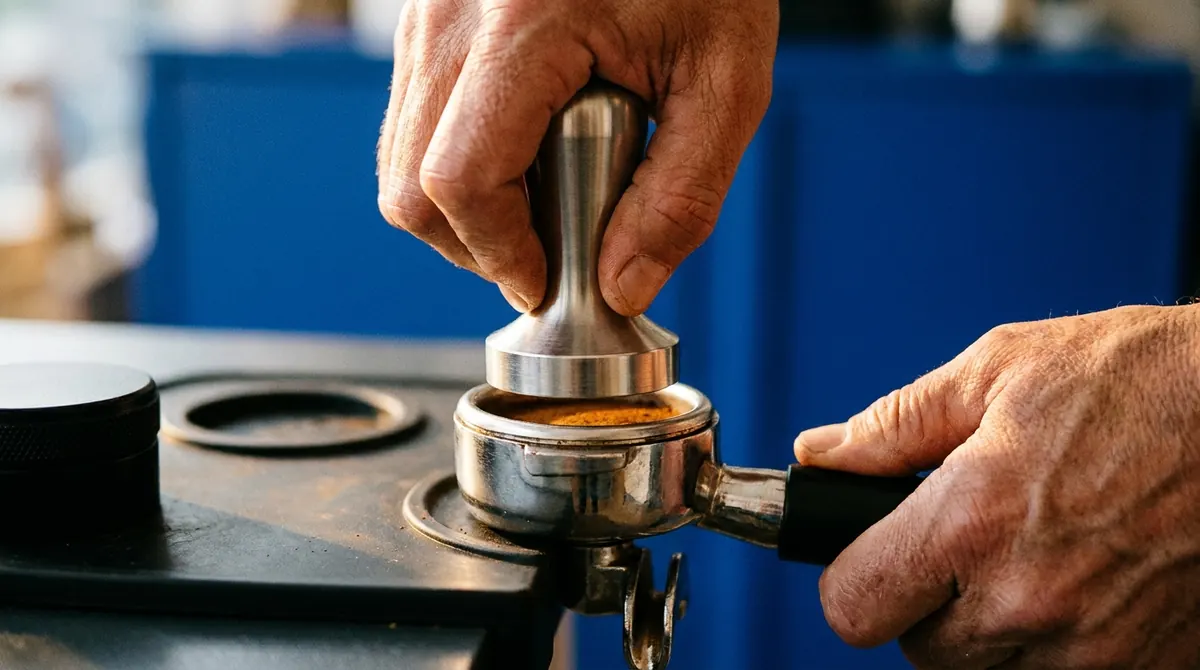
Pull a single shot of espresso into a small cup, steam cold milk until it is warm and thick with foam, then pour the milk over the shot so the drink is roughly equal parts espresso, steamed milk and foam. Aim for a milk temperature of about 55 to 65 C (139 to 149 F), use fresh cold whole milk and finish with a layer of foam at least 1 cm deep.
What is a cappuccino?
A cappuccino is an espresso-based drink made with steamed milk and topped with a layer of milk foam. It is smaller than a latte and has a thicker cap of foam. In Italy, a cappuccino is typically 25 ml of espresso with the rest of the cup filled with equal parts milk and foam. In Europe and the United States the total drink is usually about 150 to 180 ml (5 to 6 fl oz), though chains often serve it at 12 fl oz or more.
| Part | Traditional amount | Role |
|---|---|---|
| Espresso | One shot, about 25 ml in Italy | Strong coffee flavor and crema |
| Steamed milk | About one third | Sweetness and body |
| Milk foam | About one third, at least 1 cm deep | Light, thick cap and texture |
| Cup | About 150 to 180 ml (5 to 6 fl oz) | A small cup keeps the drink concentrated |
What you need
| Item | Notes |
|---|---|
| Espresso machine with a steam wand | Or a machine with an automatic milk system |
| Fresh coffee beans and a grinder | Medium to dark roasts suit milk drinks, ground finely |
| Cold whole milk | Fat helps create stable foam |
| A stainless steel milk jug | A small one that fits one drink |
| A cup of about 150 to 200 ml | A wide opening spreads the foam in a thin layer |
| A thermometer (optional) | Helps you learn the right temperature |
If you are still choosing equipment, our guides to machines for lattes and machines with a milk frother compare options.
Step by step with an espresso machine
- Preheat the machine and the cup. A warm cup keeps the drink hot longer.
- Grind and dose. Use fresh beans and a fine grind. Weigh the dose if you can.
- Pull a shot. Aim for about 25 to 30 ml of espresso in about 25 to 30 seconds, into the warm cup.
- Fill the jug. Pour cold, fresh milk into a cold jug, about a third full, and stay below the base of the spout so there is room for it to grow.
- Purge the wand. Open the steam for a second to clear water from the tip.
- Add air. Place the tip just below the surface and open the steam. You should hear a gentle hiss as air goes into the milk. Add air for a few seconds for a cappuccino, a little longer than for a latte.
- Swirl. Lower the tip deeper, off to one side, and let the milk spin. This folds the foam into the milk and breaks up large bubbles.
- Stop the steam. When the milk reaches about 55 to 65 C (139 to 149 F), or when the jug feels warm to the hand, close the steam. Overheated milk loses sweetness.
- Wipe and purge the wand. Do it right away so milk does not bake on.
- Tap and swirl. Tap the jug on the counter to pop big bubbles, then swirl it until the milk looks glossy.
- Pour. Pour steady milk into the espresso, then spoon on extra foam if you want a thicker cap.
Getting the milk right
Milk is the part that takes practice. The milk should be cold when you start, because that gives you time to add air before the milk gets hot. Use fresh whole milk, which creates better bubbles and foam than lower-fat milk. If the milk is too cold when you try to texture it, the foam may be thin with uneven bubbles. If it is too hot, the milk scorches and tastes harsh.
For a cappuccino you want more foam than for a latte. Add air for longer, so that the milk grows noticeably in volume, and then spin it. A cappuccino is traditionally topped with macrofoam, which is thicker and airier, while a latte uses silky microfoam. See our guide to steaming milk for the technique in detail.
Cappuccino compared with other milk drinks
| Drink | Espresso | Milk | Foam | Typical size |
|---|---|---|---|---|
| Cappuccino | One shot | Steamed milk | Thick layer of foam | About 150 to 180 ml |
| Latte | One or two shots | Plenty of steamed milk | Thin layer of microfoam | About 200 to 300 ml |
| Macchiato | One shot | A small spoon of foam | Dot of foam | About the size of an espresso |
| Americano | One or two shots | None, with hot water | None | Varies |
A latte has more milk and less foam than a cappuccino, and is usually served in a larger glass. For a recipe, see our guide to making a latte.
Choosing the milk
| Milk | How it behaves | Tip |
|---|---|---|
| Whole milk | Creamy and the easiest to foam | Best choice to learn on |
| Reduced-fat milk | Foams well but is less creamy | Foam can be stiffer and drier |
| Oat milk | Foams well, especially barista versions | Do not overheat |
| Soy milk | Foams well, results vary by brand | Use fresh, and warm it gently |
| Almond milk | Often thinner and harder to foam | Look for barista versions |
Oat, soy and almond milks are good dairy-free alternatives, but results vary by brand, so try a few.
Making a cappuccino on automatic machines
Bean-to-cup machines make this far simpler. Many have a cappuccino button that grinds, brews and froths for you. On a model with an automatic milk carafe, fill it to the line shown for the drink, dock it, and press the icon. On machines with a manual wand, use the steps above. See our guides to super-automatic machines and the De'Longhi Magnifica Evo, or how to use a De'Longhi.
How to make a cappuccino without an espresso machine
You can make a good cappuccino without a machine, but the espresso and the foam will come from different tools.
- Coffee: A moka pot or a French press can stand in for the espresso, with a moka pot giving the more concentrated result. Avoid pour-over and drip coffee, since filters weaken the body of the coffee and the drink needs a strong base. See how to make espresso without a machine and moka pot vs espresso machine.
- Milk: Heat it in a saucepan to the target temperature and froth it with a whisk, a handheld frother or an electric frother. Our guides to handheld frothers, milk frothers and frothing without a frother explain the options.
- Assembly: Pour the milk into the coffee, holding the foam back with a spoon, then add the foam on top.
A short history of the cappuccino
The name comes from the Capuchin friars, and the brown color of their habits, which resembles coffee with a little milk. A Viennese drink called a Kapuziner, coffee with a few drops of cream, appeared on menus in the late 1700s, and the drink spread through the Habsburg lands to northern Italy. The modern cappuccino took shape in the twentieth century as espresso machines arrived. Steamed milk on top was a later addition, and the cappuccino spread alongside espresso in Italian neighborhoods in the United States and in cafes in the United Kingdom.
Choosing beans for a cappuccino
Milk softens and sweetens espresso, so a coffee that tastes good in a cappuccino needs enough body and flavor to come through. Medium to dark roasts, freshly roasted and finely ground, are the usual choice. In Italy, where the drink became popular, dark roasts with a robust taste were common. Lighter roasts can taste sour or thin in milk, so choose a roast labeled for espresso or milk drinks. See our guide to the best espresso beans for ideas.
Making two cappuccinos
On a single-boiler machine, pull both shots first, then steam the milk. Steam the milk for both drinks in one jug if it is big enough to spin, and split the milk between cups. A larger jug lets you steam more, but a very full jug is hard to texture, so keep it about a third full. On a machine with a separate steam boiler or a heat exchanger, you can brew and steam together, which speeds up a round of drinks. See our guide to dual boiler machines if you make drinks for several people.
How different machines make the drink
| Machine type | How the cappuccino is made |
|---|---|
| Semi-automatic with a steam wand | You grind, tamp, brew and steam yourself |
| Bean-to-cup manual | Machine grinds, you tamp and steam, as on a La Specialista |
| Super-automatic with a carafe | Press the cappuccino icon; the machine froths and pours |
| Super-automatic with a wand | The machine brews the shot, you steam the milk |
| Pod machine with a frother | Brew a capsule and froth milk in a separate frother |
| Moka pot and a frother | Brew strong coffee and add frothed milk |
Cups and glasses
A traditional cappuccino is served in a small cup with a handle, with a capacity of about 180 ml at most. A wide mouth spreads the foam into a thin layer on top, and a thick ceramic cup holds heat well. If you use a larger mug, the drink loses its balance, so scale the espresso and milk instead of filling the cup with milk. Warm the cup with hot water before you pour.
Practice routine for steaming milk
- Practice with cold water and a drop of dish soap to learn where to hold the tip.
- Move to milk, and focus only on adding air for a few seconds and then spinning.
- Watch the sound. A hiss means air, and a quiet roar means the milk is spinning.
- Check the temperature with your hand or a thermometer, and stop when the jug is warm, not too hot to hold.
- Tap and swirl, then pour a drink and note what to change.
Scaling the recipe for a bigger cup
| Cup size | Espresso | Milk and foam |
|---|---|---|
| About 150 ml (5 fl oz) | One single shot | Fill the rest with milk and foam |
| About 180 ml (6 fl oz) | One shot, or a short double | Fill the rest with milk and foam |
| About 240 ml (8 fl oz) | A double shot | More milk, and a thinner layer of foam |
| About 360 ml (12 fl oz) | A double shot, or two singles | Closer to a latte than a traditional cappuccino |
As the cup grows, the drink moves toward a latte. If you like the strong coffee taste of a cappuccino, keep the cup small.
After you finish
Clean as you go. Wipe the steam wand immediately and purge it, rinse the jug, knock out the puck and rinse the portafilter. Milk residue is the hardest to remove once it dries, and a dirty wand ruins the next drink. See how to clean an espresso machine for a full routine.
Beginner equipment checklist
- An espresso machine with a steam wand, or an automatic machine with a cappuccino button.
- A burr grinder, unless your machine has one built in.
- A small stainless steel jug and a kitchen scale.
- A tamper, if your machine uses a portafilter.
- Two warm cups of about 150 to 200 ml.
- A thermometer, until you can judge the temperature by touch.
Our beginner machine guide and accessories guide list good starting points.
Troubleshooting
| Problem | Likely cause | Fix |
|---|---|---|
| Foam is thin and bubbly | Milk was too warm, or too much air too fast | Start with colder milk and add air gently |
| Foam is stiff and dry | Too much air | Add air for a shorter time, then spin the milk |
| Milk tastes burnt | Overheated | Stop the steam at about 65 C (149 F) |
| Drink is too weak | Too much milk or a weak shot | Use a smaller cup or a double shot |
| Foam separates fast | Milk is stale or the foam is too coarse | Use fresh milk and swirl the jug after steaming |
| Coffee is bitter | Over-extracted shot | Grind slightly coarser and stop the shot earlier |
Serving and variations
- Cocoa or cinnamon: A dusting on top is common, with cocoa in Europe and Australasia and cinnamon in the United States and South Korea.
- Double shot: Use two shots in a larger cup for a stronger drink.
- Dairy-free: Use a barista-style plant milk and do not overheat it.
- Iced version: Brew a shot over ice, add cold milk and top with cold foam from a frother.
- Different cup sizes: A traditional cup is 150 to 180 ml. If your cup is larger, scale the espresso and milk.
Common mistakes
- Using warm or old milk, which foams poorly.
- Steaming too long, so the milk overheats.
- Pouring the foam first, before the milk.
- Using a large cup that thins the foam layer.
- Skipping the purge, so water dilutes the milk.
- Leaving milk on the wand.
Tips for a better cappuccino
- Use a fresh, finely ground medium to dark roast for the espresso.
- Preheat the cup and the jug of the machine.
- Use a small jug so the wand can spin the milk.
- Clean the wand immediately.
- Practice with water and a drop of dish soap to learn the motion before you waste milk.
For the espresso side, see how to make espresso at home and how to use an espresso machine.
Questions people ask
What is the ratio for a cappuccino?
Traditionally equal parts espresso, steamed milk and milk foam. In Italy it is about 25 ml of espresso with the rest milk and foam in equal parts.
How much milk do I need for a cappuccino?
You need only a small amount of cold milk for a cup of 150 to 180 ml. Use a small jug, filled about a third full, so there is room for the milk to grow.
What is the difference between a cappuccino and a latte?
A cappuccino is smaller and has a thick layer of foam, while a latte has more milk and a thin layer of microfoam and is served in a larger glass.
What temperature should the milk be?
About 55 to 65 C (139 to 149 F). Colder milk gives thin foam, and hotter milk scorches.
Can I make a cappuccino without a machine?
Yes. Make strong coffee in a moka pot or similar brewer, and froth heated milk with a whisk or frother.
Which milk is best for a cappuccino?
Whole milk is the easiest. Oat, soy and almond milks work as dairy-free alternatives, and barista versions foam best.
How many shots are in a cappuccino?
A traditional cappuccino has one shot, though double-shot versions are common in large sizes.
What cup should I use?
A cup of about 150 to 200 ml with a wide mouth is best. It spreads the foam in a thin, even layer.
Why is my foam not thick?
The milk may be too warm or old, or you may not have added enough air at the start. Use cold fresh milk and add air for a few seconds before swirling.
What does a cappuccino taste like?
It tastes of espresso softened by sweet steamed milk, with a light, airy foam on top. It is stronger and less milky than a latte.
Can I make a cappuccino with an espresso pod?
Yes. Brew a capsule into a small cup and add steamed or frothed milk. Machines with a built-in frother make this easier.
Why is it called a cappuccino?
It is named for the Capuchin friars, whose brown habits resemble the color of coffee with a little milk.
Is a cappuccino stronger than a latte?
It tastes stronger because it has less milk. Both can use the same amount of espresso.
Should I add sugar to a cappuccino?
It is a matter of taste. Well-steamed milk is naturally sweet, so many people add none. Add sugar to the espresso before the milk goes in.
Can I use a frother instead of a steam wand?
Yes. A handheld or electric frother makes foam from warm milk. The result is usually airier and less silky than wand-steamed milk, which suits a cappuccino well.
How long does it take to make a cappuccino?
Once the machine is warm, a practiced person needs only a few minutes: about half a minute for the shot, about a minute to steam the milk and a little time to pour. Expect it to take longer while you learn.
Can I make a cappuccino ahead of time?
No. The foam collapses and the milk cools within minutes, so make it fresh and drink it soon after.
Sources
Read next
- Steam milkPitcher size, tip position, sound, temperature and fixes for microfoam and thick foam.
- Make a latteEspresso, milk ratio and steaming, step by step.
- Use an espresso machineThe universal workflow for any machine.
- Best for lattesMachines that make milk drinks easy.
- Best milk frothersElectric and handheld frothers for lattes.
- How to descale a BrevilleStep-by-step descaling for Breville espresso machines.