How to make a latte with an espresso machine
A latte is espresso plus a lot of steamed milk and a thin layer of foam. The skill is in the ratio and the milk texture.
By Daniel Russo. Updated .
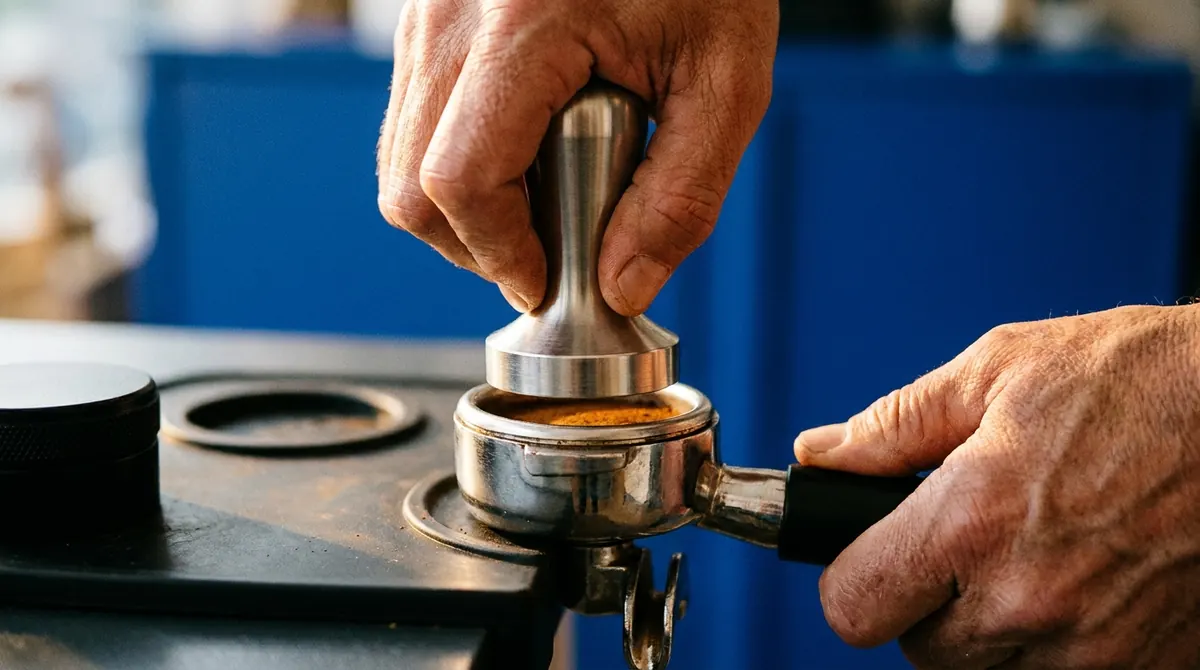
Pull a double shot of espresso into a warm cup, steam about 6 to 10 ounces of milk to roughly 150°F until it is glossy microfoam with no big bubbles, then pour the milk into the espresso. The classic ratio is one part espresso to three parts steamed milk with a thin layer of foam on top. Use whole milk while you learn, and purge and wipe the steam wand after every drink.
What goes in a latte
A latte is built from two ingredients. Retailer and recipe guides agree on the proportions:
| Drink | Espresso | Milk | Foam | Typical size |
|---|---|---|---|---|
| Latte | 1 to 2 oz | 8 to 10 oz steamed | Thin layer | 10 to 15 oz |
| Cappuccino | Equal parts with milk | Equal part steamed | Thick, airy layer | Smaller |
| Flat white | Same espresso as a latte | Less milk, little microfoam | Minimal | Smaller than a latte |
Put simply, a latte runs about 1 part espresso to 3 parts steamed milk. A cappuccino has less milk and much more foam. A flat white keeps the same amount of espresso in a smaller cup, so it tastes stronger. If you steam by eye, start with about 6 ounces of milk for a single-shot latte and 8 to 10 ounces for a double.
What you need
- An espresso machine with a steam wand or an automatic milk system. If you do not have either yet, see the best espresso machines for lattes.
- A grinder and fresh beans. A medium or medium-dark espresso roast holds up against a lot of milk.
- A steaming pitcher. Pick a size that fits your wand and your drink. A 12 oz pitcher suits one latte; 20 oz suits two.
- Whole milk to start. Milk with more fat steams easier. Barista versions of oat, soy and almond milk also work.
- A scale, a tamper and a thermometer if you want repeatable results.
| Product | Fits | Use | Price band | Price |
|---|---|---|---|---|
| Rhino Coffee Gear Pro Milk Pitcher | Any steam wand | Steaming and latte art | Under $30 | Check price |
| Timemore Black Mirror Basic Scale | Under most drip trays | Weigh dose and shot | Under $60 | Check price |
| Normcore Spring-Loaded Tamper | 51, 53.3, 58.5mm and more | Even, consistent tamping | Under $50 | Check price |
Step 1: pull the shot
- Warm the cup. A latte cup is large and cools quickly. Run hot water from your machine's hot water outlet into it, or use a kettle, then empty it.
- Grind and dose. About 7 to 10 grams of ground coffee makes a single shot and 15 to 18 grams makes a double. Most latte drinkers use a double.
- Level and tamp. Level the grounds, then tamp with firm, even pressure. A common rule of thumb is about 30 pounds.
- Pull the shot. A reliable starting recipe is 18 grams in, about 36 grams of espresso out, in 25 to 30 seconds. Pull straight into the warm cup. If you use a flavored syrup, put it in the cup first so the shot mixes it in.
Step 2: steam the milk
Start with cold milk in a cold pitcher. Fill it only part way, because the milk grows as it takes in air.
- Purge the wand. Open the steam valve for a second to clear any water or old milk.
- Place the tip. Submerge it just below the surface, slightly off center, and open the steam fully.
- Stretch. Keep the tip near the surface for the first few seconds so air goes in with a quiet hiss.
- Spin. Sink the tip a little deeper and tilt the pitcher so the milk whirls. This breaks bubbles into a glossy microfoam.
- Stop at about 150°F. That is when the pitcher is just too hot to hold comfortably. Turn off the steam before you take the tip out.
- Clean right away. Wipe the wand with a damp cloth and purge again so milk does not bake on.
With an automatic frother, such as those on a machine with a built-in frother, choose your drink or froth setting and the machine does the texturing.
Step 3: combine and pour
- Tap the pitcher on the counter to pop large bubbles and swirl it so the foam and milk mix.
- Tilt the cup and begin pouring the milk into the espresso from about three to four inches above the cup.
- As the cup fills, bring the pitcher closer and straighten the cup. This is how latte art is formed.
Heavy foam on top is normal for a cappuccino but not for a latte. If your latte is mostly foam, you stretched the milk too long.
Troubleshooting
| Problem | Likely cause | Fix |
|---|---|---|
| Big bubbles, no shine | Too much air or the tip too high | Lower the tip, shorten the stretch and tap and swirl before pouring. |
| Milk tastes burnt or thin | Overheated | Stop earlier, around 150°F. |
| Latte tastes weak | Too much milk or too little espresso | Use a double shot or less milk. |
| Latte tastes bitter or sour | Shot is off | Adjust the grind: finer if sour and fast, coarser if bitter and slow. |
| Milk will not foam | Old or low-fat milk, or a dirty wand tip | Use fresh whole milk and clean the tip hole. |
| Latte goes cold quickly | Cold cup | Preheat the cup. |
Making a latte on other machines
On a pod machine like a Nespresso with an Aeroccino, brew the espresso into your mug and pour the milk over the top. On a super-automatic with milk carafe, select the latte drink and the machine does the rest. See the super-automatic guide. Without a steam wand, you can heat milk and froth it by other means; see how to froth milk without a frother.
Questions people ask
How many shots of espresso are in a latte?
One or two. A single shot suits a small latte; a double shot suits a standard 10 to 15 ounce drink. The double is the usual choice if you want the coffee to stand up to the milk.
What is the difference between a latte and a cappuccino?
The ratio. A latte has more steamed milk than espresso and a thin layer of foam. A cappuccino has roughly equal parts espresso, steamed milk and a thick layer of foam, in a smaller cup.
What milk is best for a latte?
Whole milk steams easiest because of its fat. Barista versions of oat, soy and almond milks work well. Use fresh milk and keep it cold until you steam it.
Do I need a steam wand to make a latte?
No, but you need some way to heat and froth milk. An automatic milk system, a pod-machine frother, or a separate electric frother all work. A steam wand gives the best texture and the most control.
How hot should I steam milk for a latte?
Around 150°F. Past that, milk starts to taste scorched and loses sweetness.
Sources
Read next
- Best for lattesMachines that make milk drinks easy.
- Steam milkPitcher size, tip position, sound, temperature and fixes for microfoam and thick foam.
- Make a cappuccinoThe ratio, the milk, the steps and the fixes, with and without an espresso machine.
- Best milk frothersElectric and handheld frothers for lattes.
- Tamp espressoPressure, posture, leveling and the mistakes that ruin a shot.
- Gaggia Classic vs SilviaTwo classic single-boiler 58mm machines, compared on steam, heat-up, build and price.