How to steam milk with an espresso machine
Steaming milk is a matter of two jobs: adding a little air, then heating while the milk spins. Learn the tip position, the sound and the temperature, and it becomes routine.
By Daniel Russo. Updated .
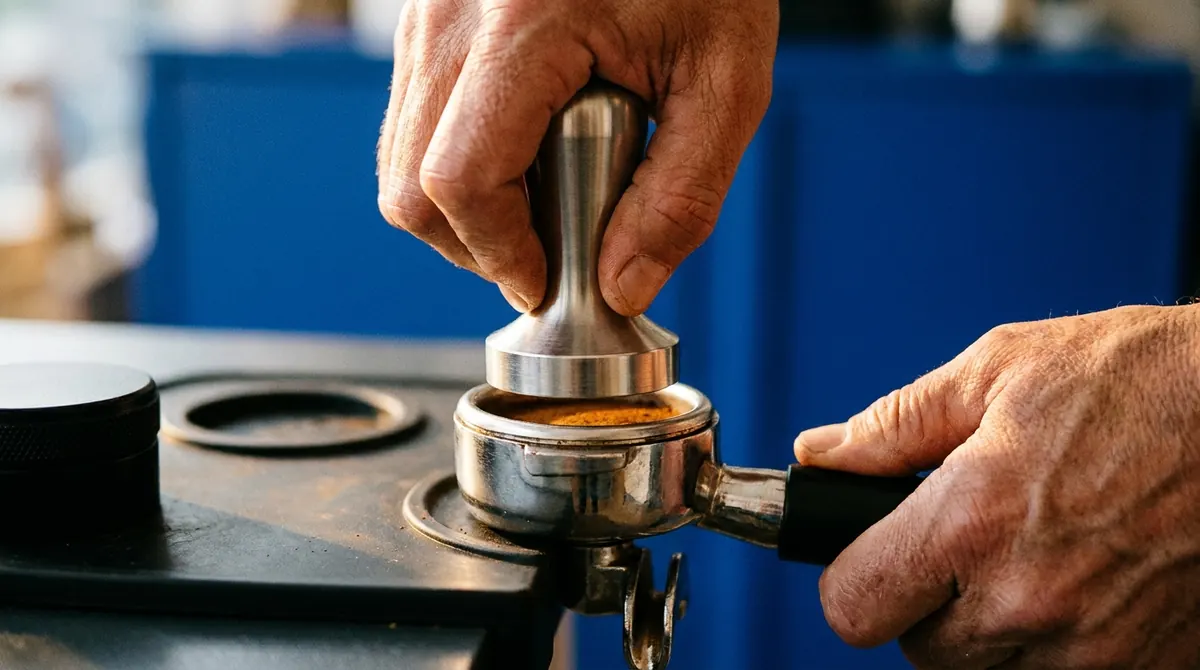
Fill a cold pitcher about half full of cold milk, purge the wand, then put the tip just below the surface, slightly off center, and open the steam. Listen for a soft tearing or hissing sound as air goes in until the milk has stretched by about half, then lower the tip so the milk spins in a whirlpool. Stop when the pitcher is almost too hot to hold, around 55 to 65 C (130 to 150 F), then wipe the wand.
What you need
| Item | Notes |
|---|---|
| A steam wand | On a semi-automatic, or a machine with a manual frother |
| A stainless steel pitcher | A small one for single drinks and a larger one for lattes or two drinks |
| Cold, fresh milk | Whole milk is the easiest to learn on |
| A damp cloth | To wipe the wand right after steaming |
| A thermometer (optional) | Helps until you can judge by touch |
Pitcher size matters. A 12 oz pitcher suits drinks under 8 oz, like cappuccinos and cortados, and a 20 oz pitcher suits lattes or steaming milk for two drinks.
Step by step
- Start cold. Use cold milk in a cold pitcher, which gives you more time to add air before the milk gets hot.
- Fill to the right level. Fill to about a finger-width below where the spout starts, about half way. An underfilled pitcher heats too fast, and an overfilled one spills.
- Purge the wand. Open the steam for a second or two to blow out water.
- Position the tip. Place it slightly off center, just below the surface. Hold the pitcher by the handle and use your other hand to work the steam knob and feel the side of the pitcher.
- Open the steam fully. Listen for a quiet tearing or hissing sound, like paper ripping. That sound means air is going in.
- Stretch the milk. Keep adding air until the milk has grown in volume by about half. Then lower the pitcher slightly so the tip sits deeper.
- Spin and heat. The milk should swirl in a whirlpool, which folds the foam into the liquid. Keep the whirlpool going until the pitcher feels almost too hot to touch.
- Turn off the steam, remove the pitcher, then wipe and purge the wand.
- Tap and swirl. Tap the pitcher on the counter to pop big bubbles, then swirl it until the milk looks glossy and smooth.
The three zones: listen for the sound
| Tip position | Sound | Result |
|---|---|---|
| Near the surface | Bubbling, then a tearing or sucking noise | Adds air, makes foam |
| Slightly deeper | Very quiet | Spins and mixes the milk; heats without adding air |
| Near the bottom | A loud roar | Heats fast but may not spin well |
Most of the time the tip should stay in the quiet zone, with a brief tearing sound at the start. Too much tearing makes the foam stiff and bubbly.
Microfoam or thick foam
| Style | Tip position | Used for |
|---|---|---|
| Microfoam | Just below the surface while spinning and heating | Lattes, flat whites and latte art |
| Thick, dense foam | Slightly above or at the surface for longer | Cappuccinos, with a thicker cap |
Both styles need small, controlled air. Microfoam looks glossy, like wet paint, and pours easily. For a recipe that uses thicker foam, see how to make a cappuccino, and for a milkier drink see how to make a latte.
Milk temperature
Most guides suggest finishing between about 55 and 65 C (130 to 150 F). Hotter than about 70 C (160 F), the proteins start to curdle and the foam collapses, and the milk tastes flat. Stop when the pitcher is almost too hot to hold, and do not let the milk suddenly jump in volume, which is a sign it is too hot. A thermometer helps while you learn, though your hand will quickly become a reliable guide.
Choosing milk
Whole milk gives the creamiest foam and is easiest to texture. Reduced-fat milks foam well but taste less rich. Oat, soy and almond milks can be steamed, but results depend on the brand. Barista editions are formulated to foam better and are the best place to start. Always use fresh milk, and never re-steam milk that has already been heated.
Troubleshooting
| Problem | Likely cause | Fix |
|---|---|---|
| Big bubbles | Tip too high or too much air | Lower the tip a little and tap the pitcher |
| Foam is stiff and dry | Air added too long | Add air for a shorter time and spin more |
| No whirlpool | Tip too centered or too deep | Move it off center and keep the milk spinning |
| Milk is thin and flat | Too little air | Stretch the milk a little longer |
| Milk tastes burnt | Too hot | Stop earlier, around 60 C (140 F) |
| Milk heats too fast | Pitcher too small or underfilled | Use a larger pitcher or fill it to the right level |
| Weak steam | Clogged tip or machine not ready | Clean the tip and wait for the ready signal |
Clean the wand every time
Wipe the wand with a damp cloth immediately, while it is hot, then purge a short burst of steam to clear milk from inside the tip. Dried milk clogs the holes and tastes bad. For a deeper routine, see how to clean an espresso machine.
Without a steam wand
If your machine has no wand, you have other options. A handheld or electric frother makes warm foam from heated milk, and automatic machines with a carafe froth the milk for you. Our guides to frothers and steamers, handheld frothers and frothing without a frother cover them.
Practice tips
- Practice with water and a drop of dish soap first to learn the tip position.
- Do the same steps every time, and change only one thing at once.
- Use a pitcher that fits your drink size.
- Expect it to take some weeks to feel natural.
Questions people ask
How do I steam milk without making big bubbles?
Keep the tip just below the surface for a short time, then lower it so the milk whirls. Tap the pitcher and swirl to break up any large bubbles.
What temperature should steamed milk be?
Most guides suggest about 55 to 65 C (130 to 150 F). Stop when the pitcher is almost too hot to hold.
How much milk should I put in the pitcher?
About half full, or a finger-width below where the spout starts. The milk will expand as it takes in air.
Should the milk be cold?
Yes. Cold milk in a cold pitcher gives you more time to add air before it gets hot.
Can I steam oat or almond milk?
Yes, though results vary by brand. Barista editions foam best.
Why does my steamed milk taste burnt?
It was heated too high. Proteins break down above about 70 C (160 F), so stop earlier.
Can I steam milk on a machine with no wand?
Use a separate frother instead, such as a handheld whisk or an electric frother that heats the milk.
Sources
Read next
- Make a cappuccinoThe ratio, the milk, the steps and the fixes, with and without an espresso machine.
- Make a latteEspresso, milk ratio and steaming, step by step.
- Best milk frother and steamerCountertop frothers, handheld wands and steam wands: which type fits your drinks.
- Best for lattesMachines that make milk drinks easy.
- Clean an espresso machineDaily, weekly and monthly cleaning for any espresso machine, plus when to backflush and descale.
- Breville vs De'LonghiWhich brand fits the way you make coffee?